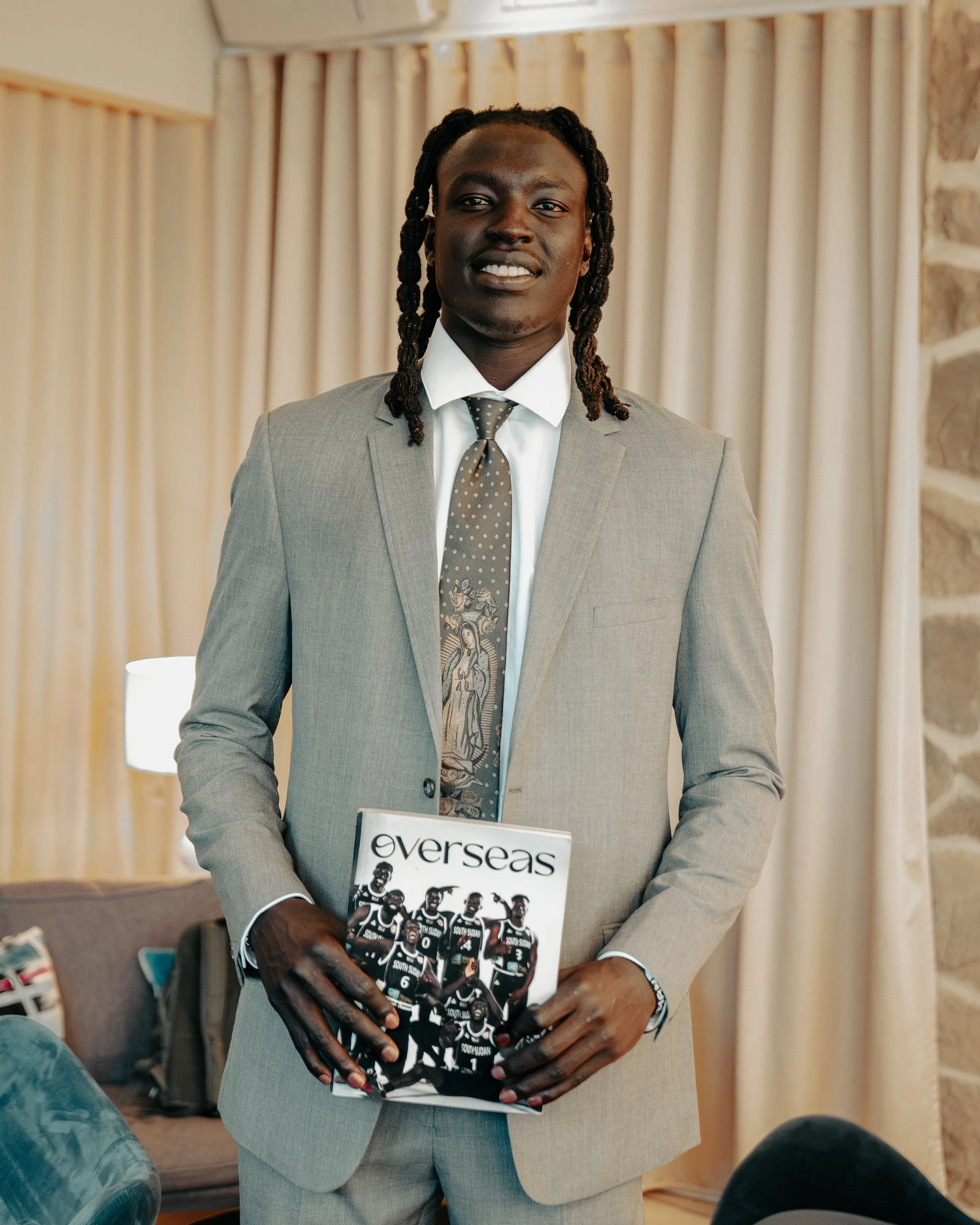
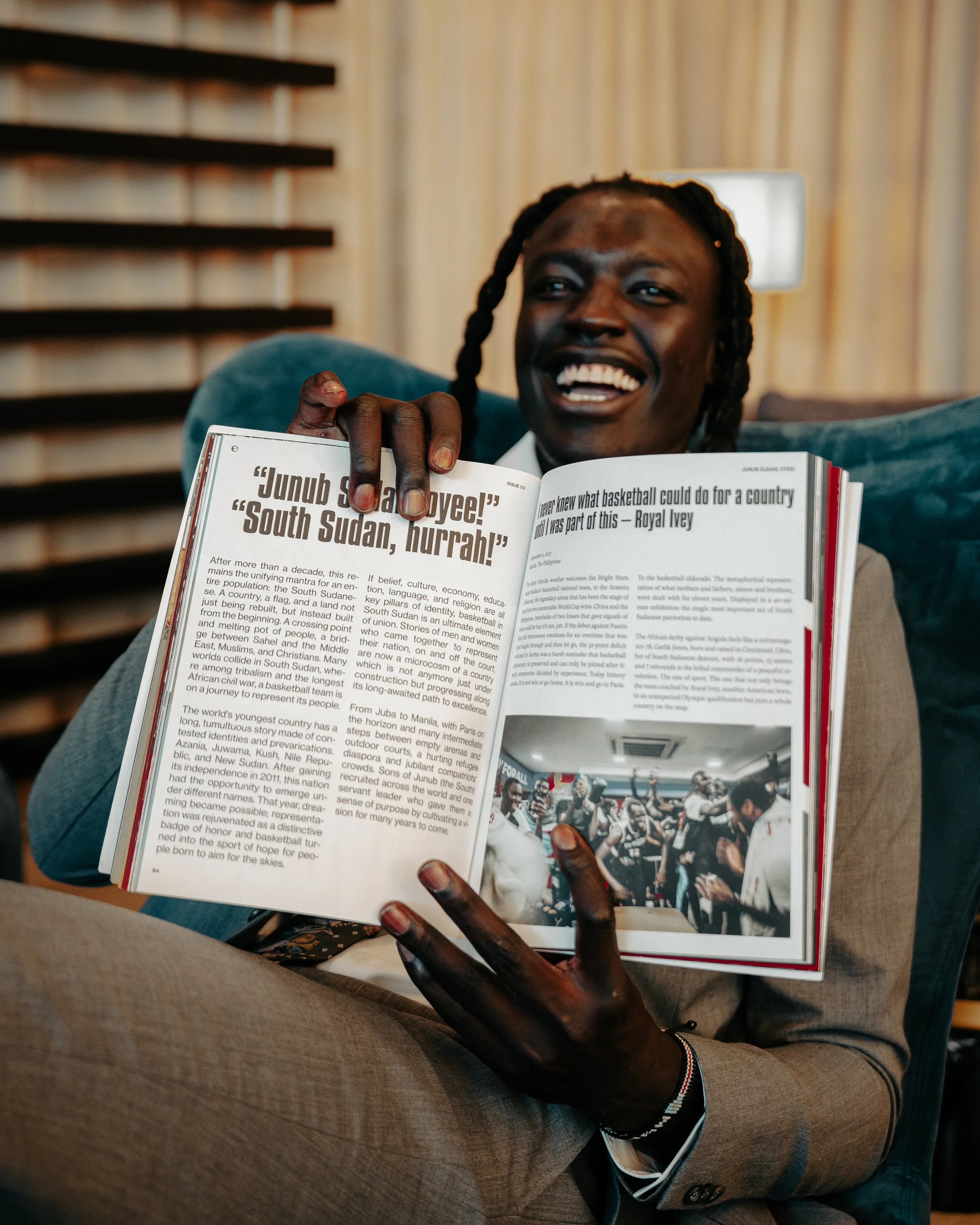
Wipe Your Tears and Guide | Wenyen Gabriel
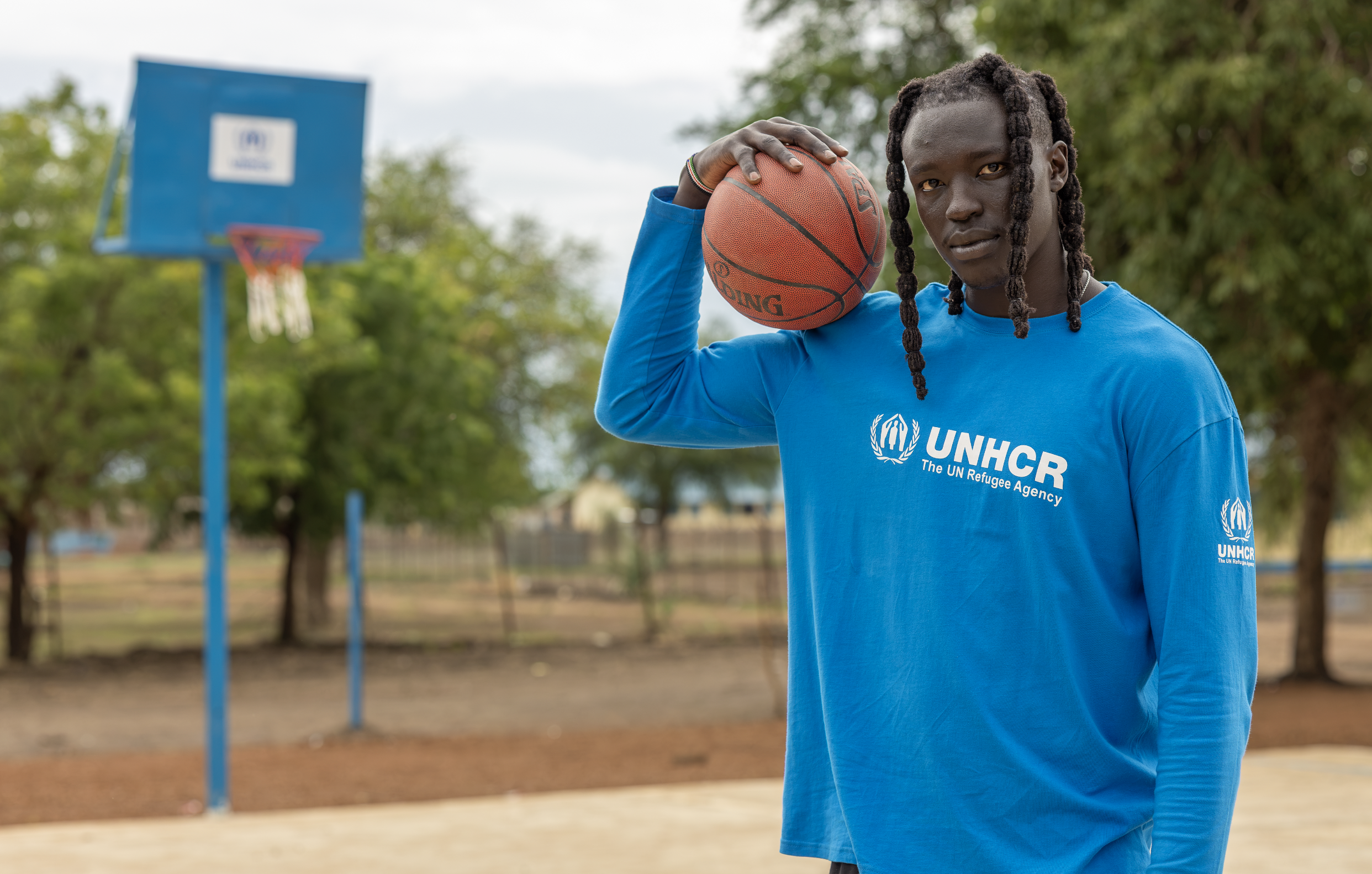
Some journeys are measured in miles. Others by the lives they make possible. Wenyen Gabriel’s began in Khartoum, crossing borders long before he was old enough to choose a path of his own. It carried him through Egypt, New Hampshire, Manila, Paris and, eventually, Geneva. Not only as the face of South Sudan on basketball’s grandest stages, but as UNHCR’s newest Global Goodwill Ambassador. Once welcomed by the United Nations as a refugee, he now returns with something of his own to give back: a voice for those still searching for safety, opportunity, and a place to call home.
Interview by Overseas | Cesare Milanti
Photography by Nino Connois and UNHCR
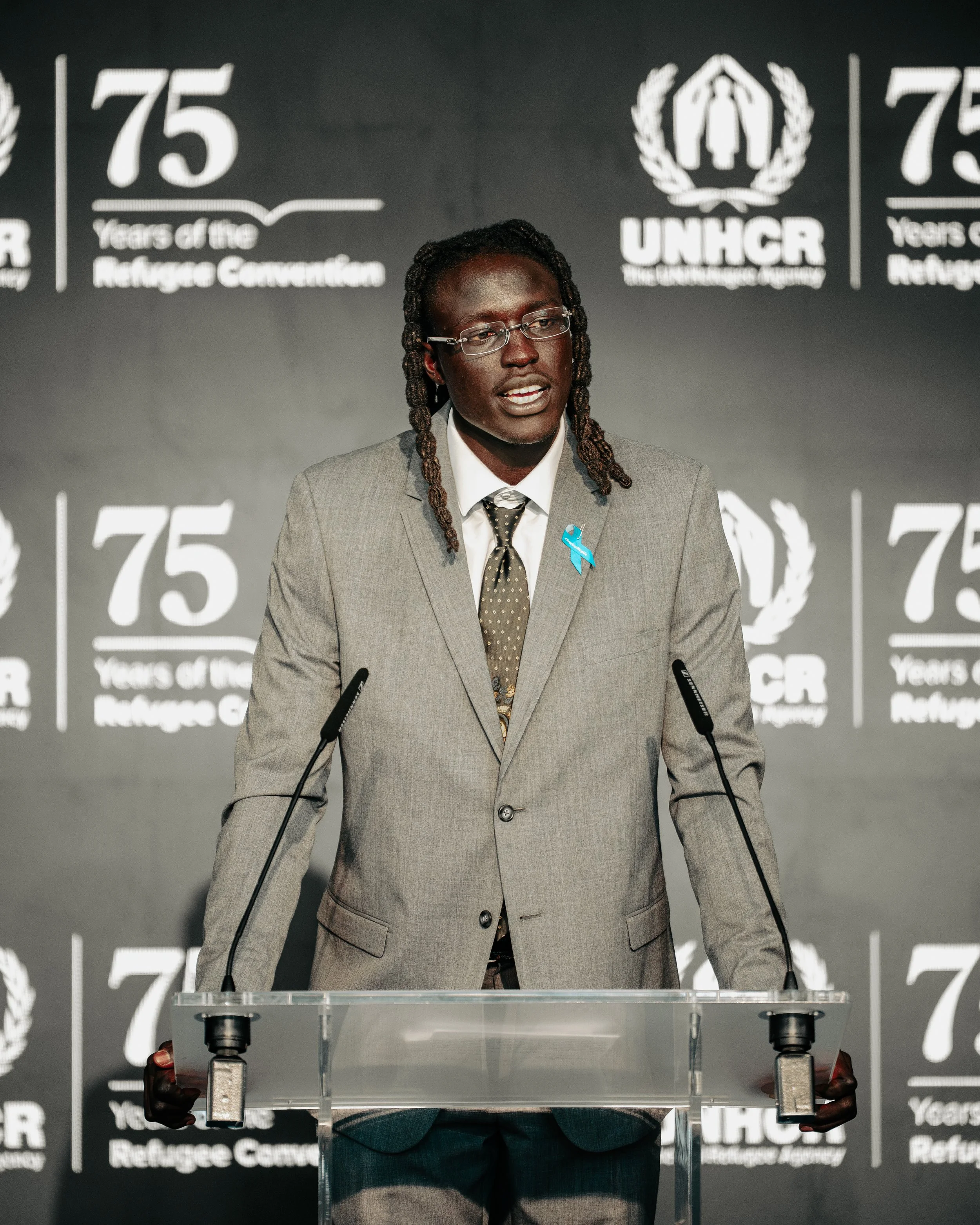
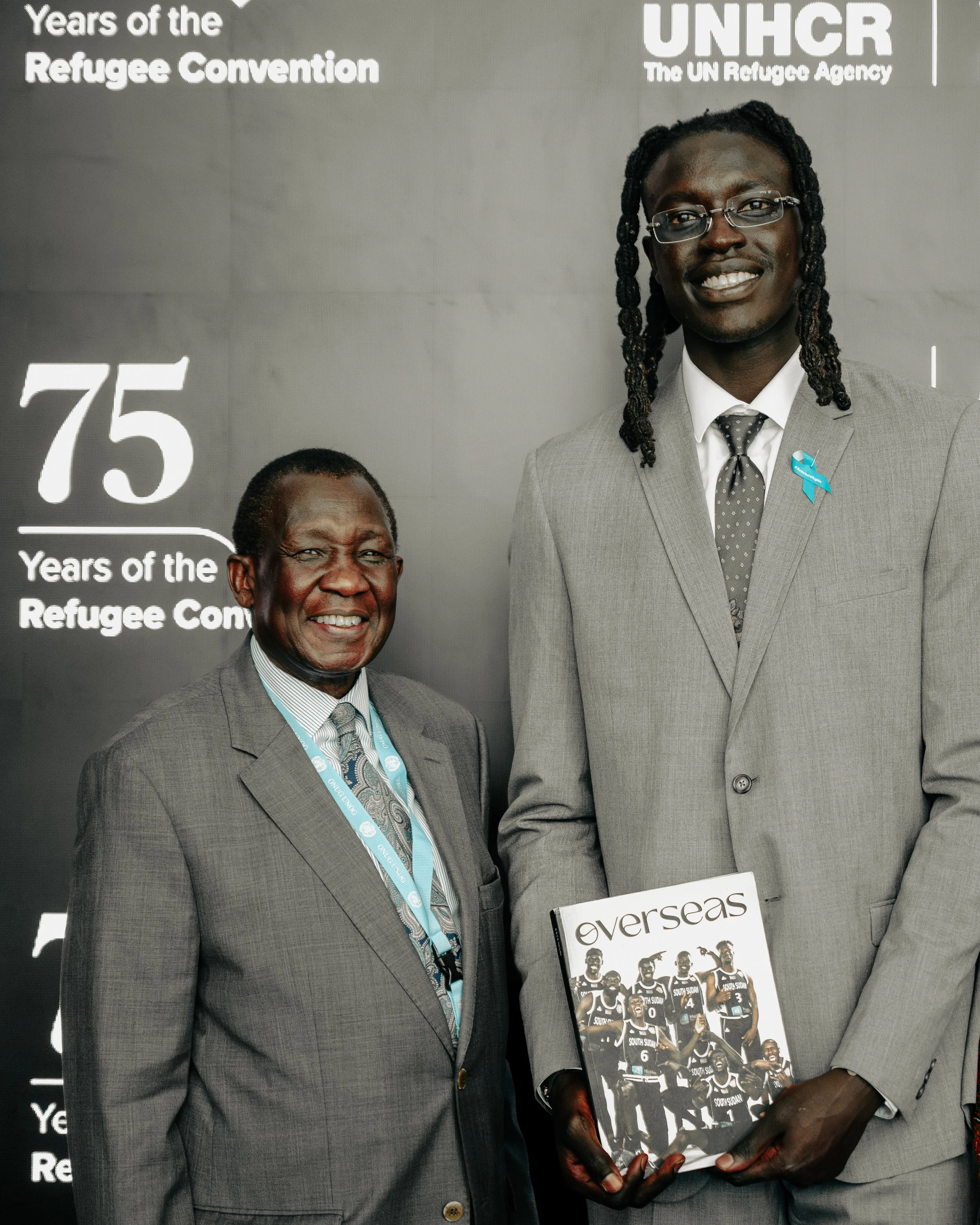
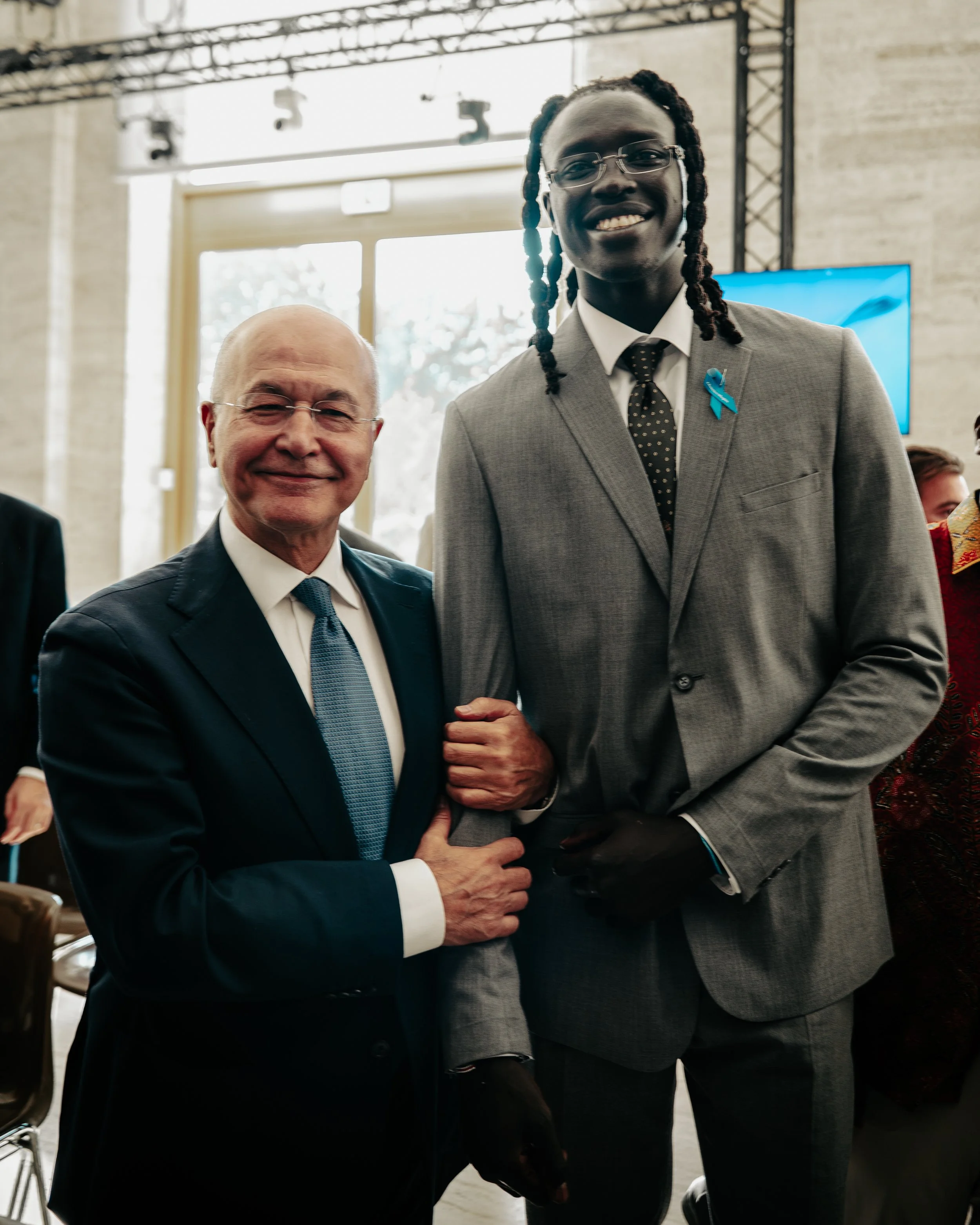
The sun shone over Geneva on Tuesday, July 28. The glass façade of the Palace of Nations reflected one of the warmest afternoons of the summer. It almost seemed as though the light itself had arrived to illuminate a day built on memory.
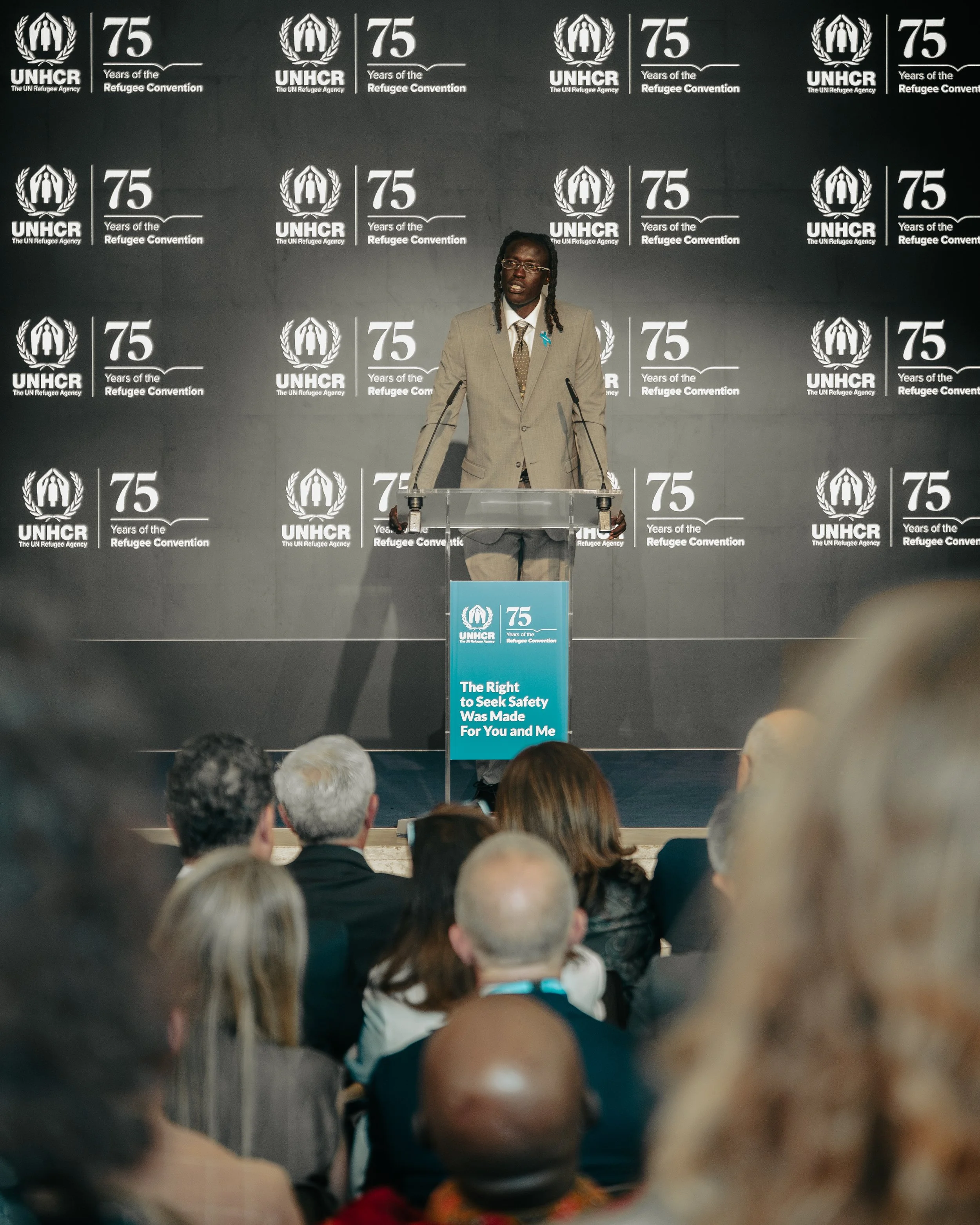
Wenyen Gabriel steps up to the lectern. At its base, a single sentence reads: ‘The right to seek safety was made for you and me.’ His eyes are already heavy with emotion. Joy, certainly. Nostalgia, perhaps. Gratitude above all. It is one of those days that remain with you for the rest of your life.
“I came into this world already uprooted from my home. Before I was born, my parents, themselves still very young, fled the conflict in what is today the country of South Sudan,”
he begins, addressing delegates, diplomats, and world leaders.
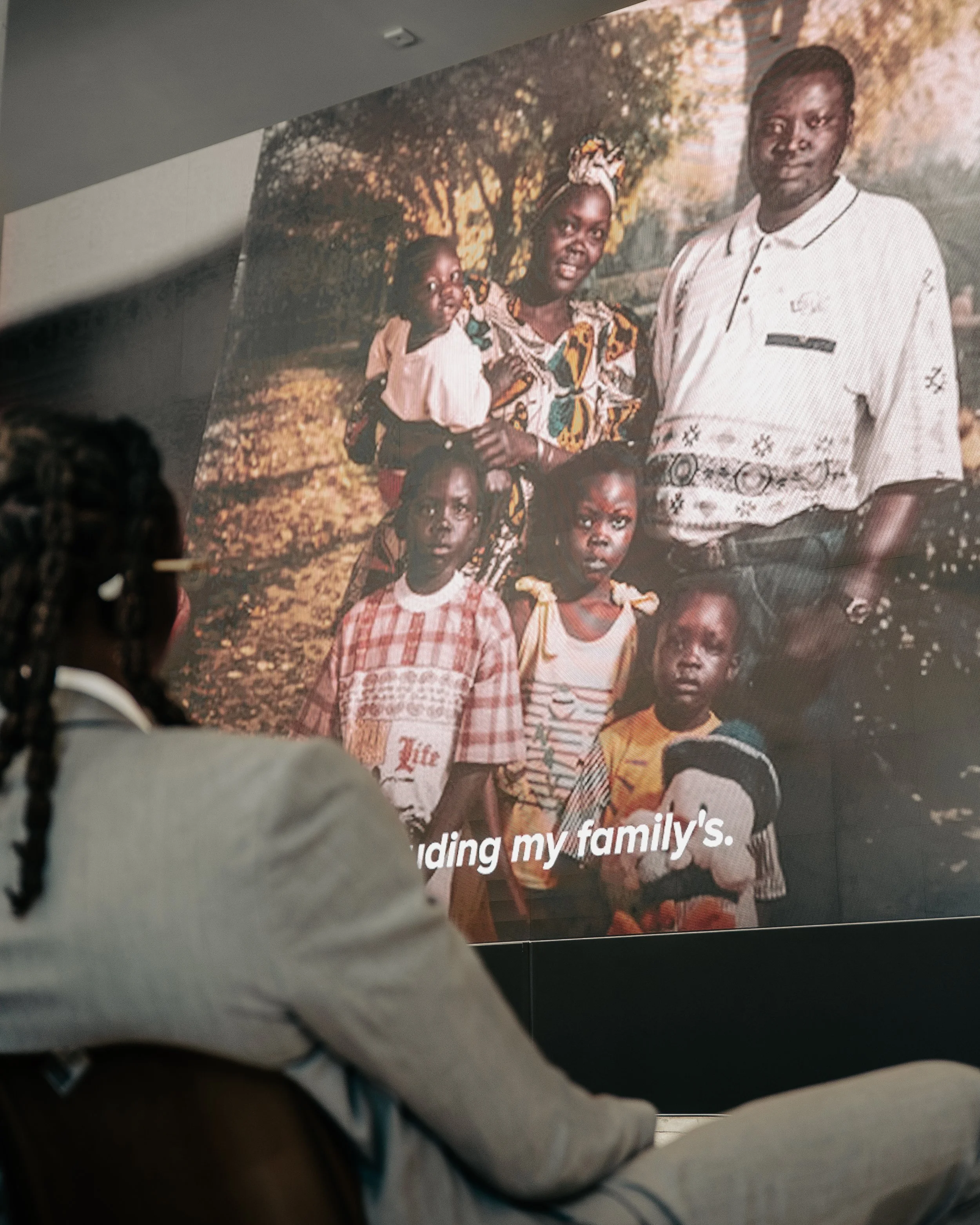
He speaks first of his parents, forced to leave their homeland like millions of other South Sudanese, only to rebuild their lives by working two and sometimes three jobs simply to keep the family afloat. Then come the names of his siblings.
Khamut. Karima. Mabor. Agar: the sister who did not survive because the Gabriel family could not find the medicine she needed. And then Wenyen. ‘To wipe away your tears,’ in Dinka. In that instant, the meaning of his name ceases to be a translation and becomes a destiny. His voice breaks.
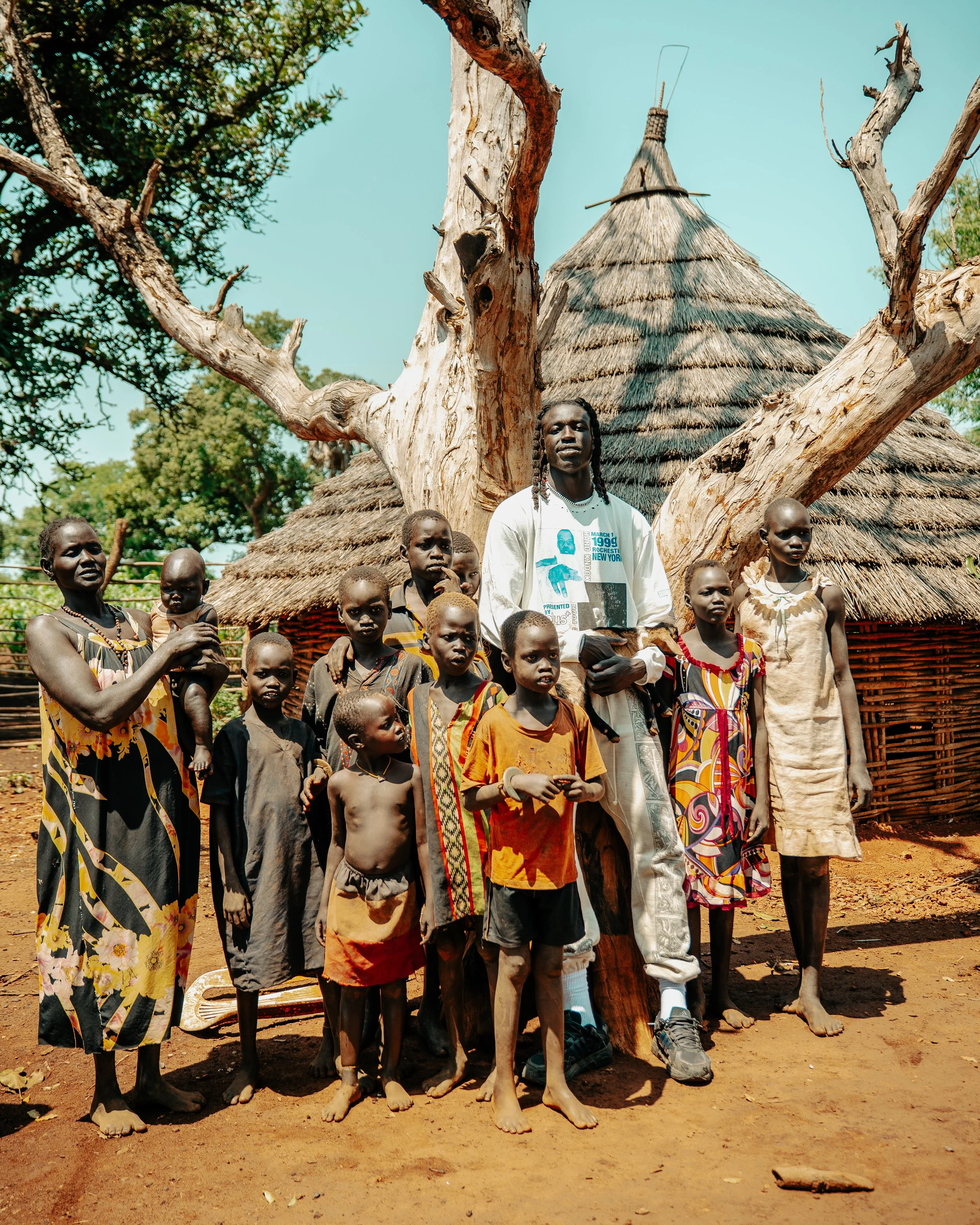
“All these dreams lit up their faces back then. Going back into war after that was such a sad moment for me, still a really young and impressionable kid. It really changed something in me; it made me want to be involved in the future,” he recalls. Today, that future is no longer something he imagines. It is something he helps shape.
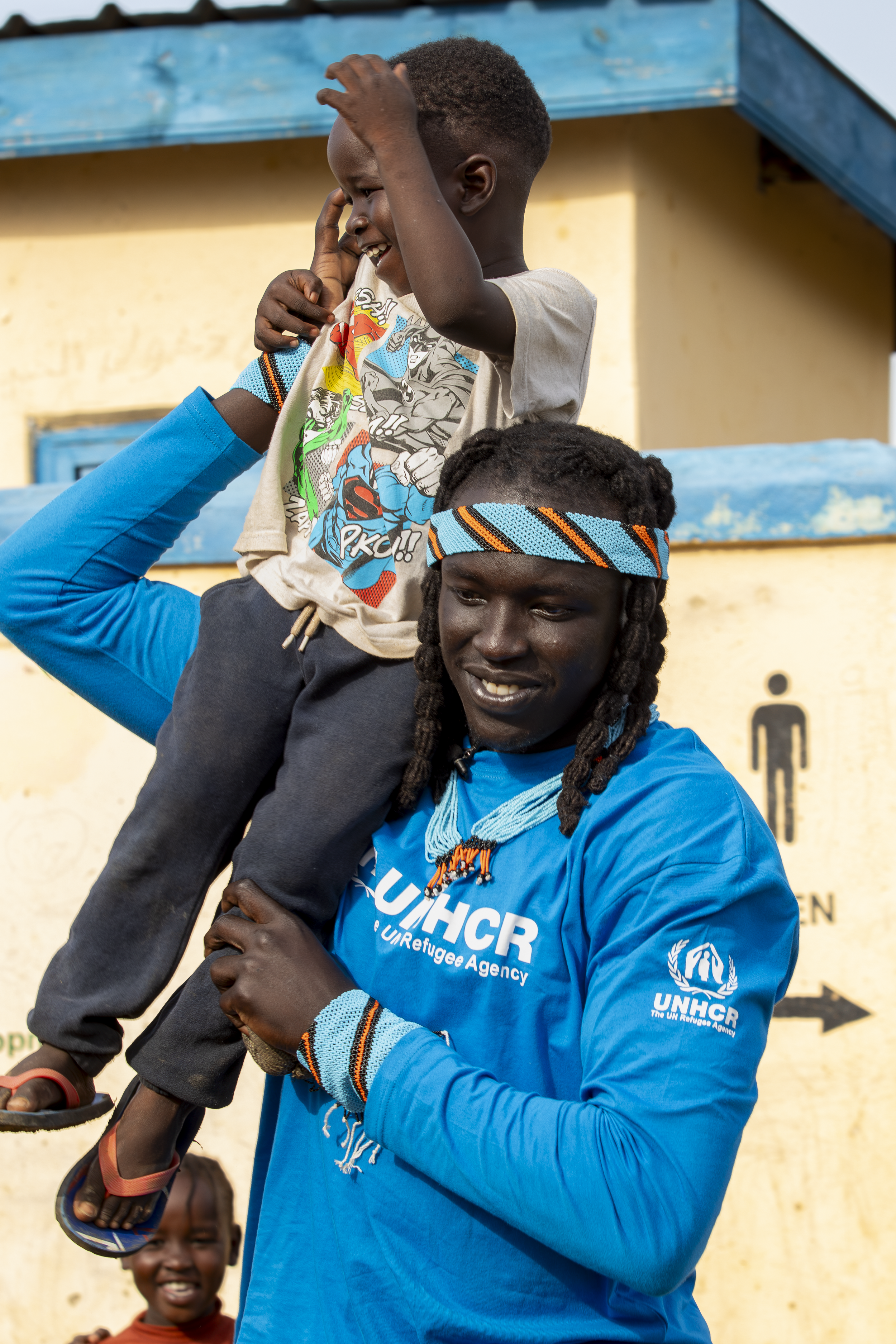
“Every time I go back to South Sudan, even if it’s for a short period of time, they might say that I’m working really hard and doing a lot of work. But to me, it’s revitalizing. It’s reenergizing to be able to touch base with my people and get blessings from my ancestors,” he says. It means way more than just a role assignment.
“The first time I went back, I saw how my country is struggling. That memory is still very vivid to me. It made me want to be more than just a UNHCR supporter. Being appointed as a UNHCR Goodwill Ambassador allows me to do this on an even larger scale. I want the world to hear stories from kids in schools having to go through life’s obstacles.”
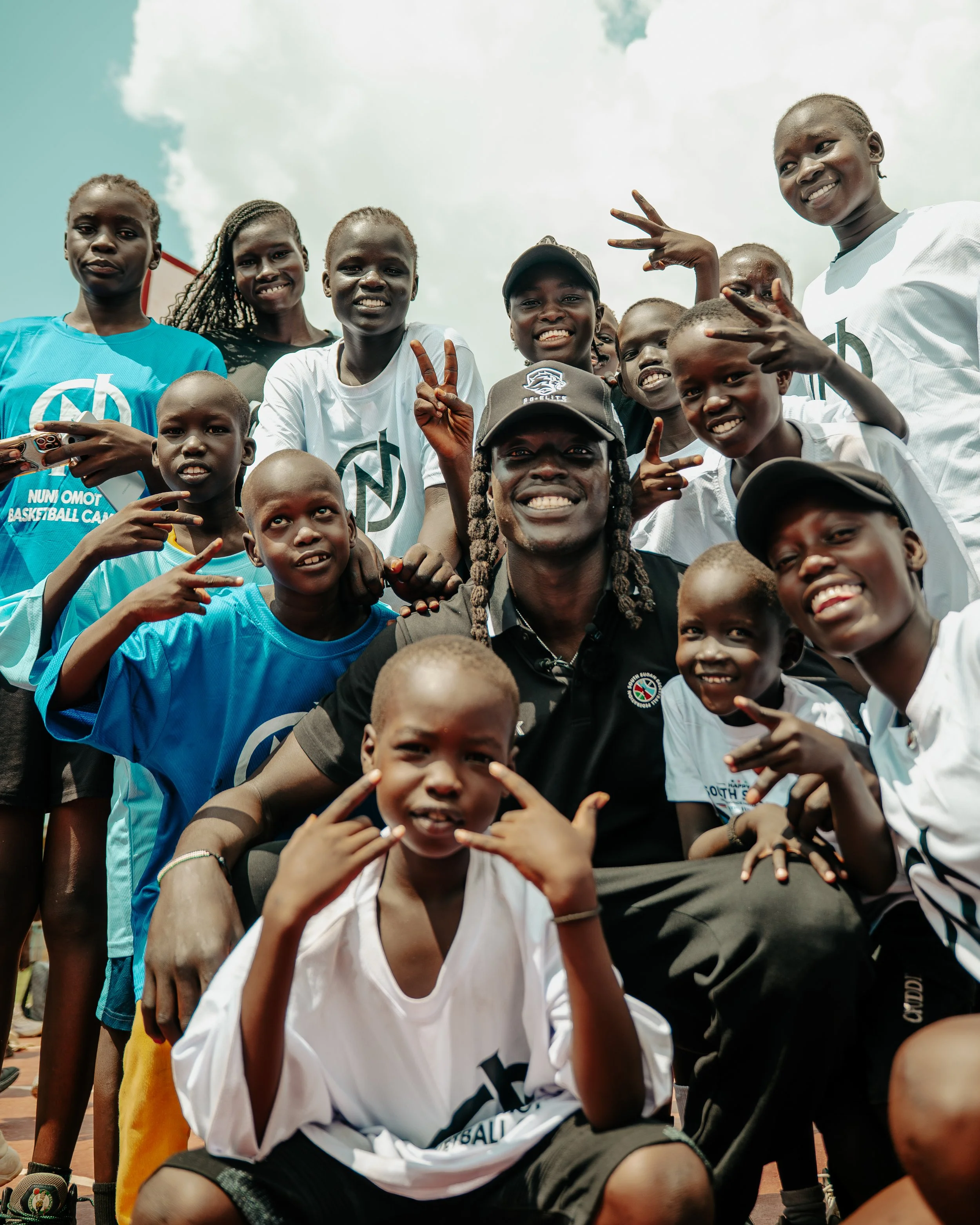
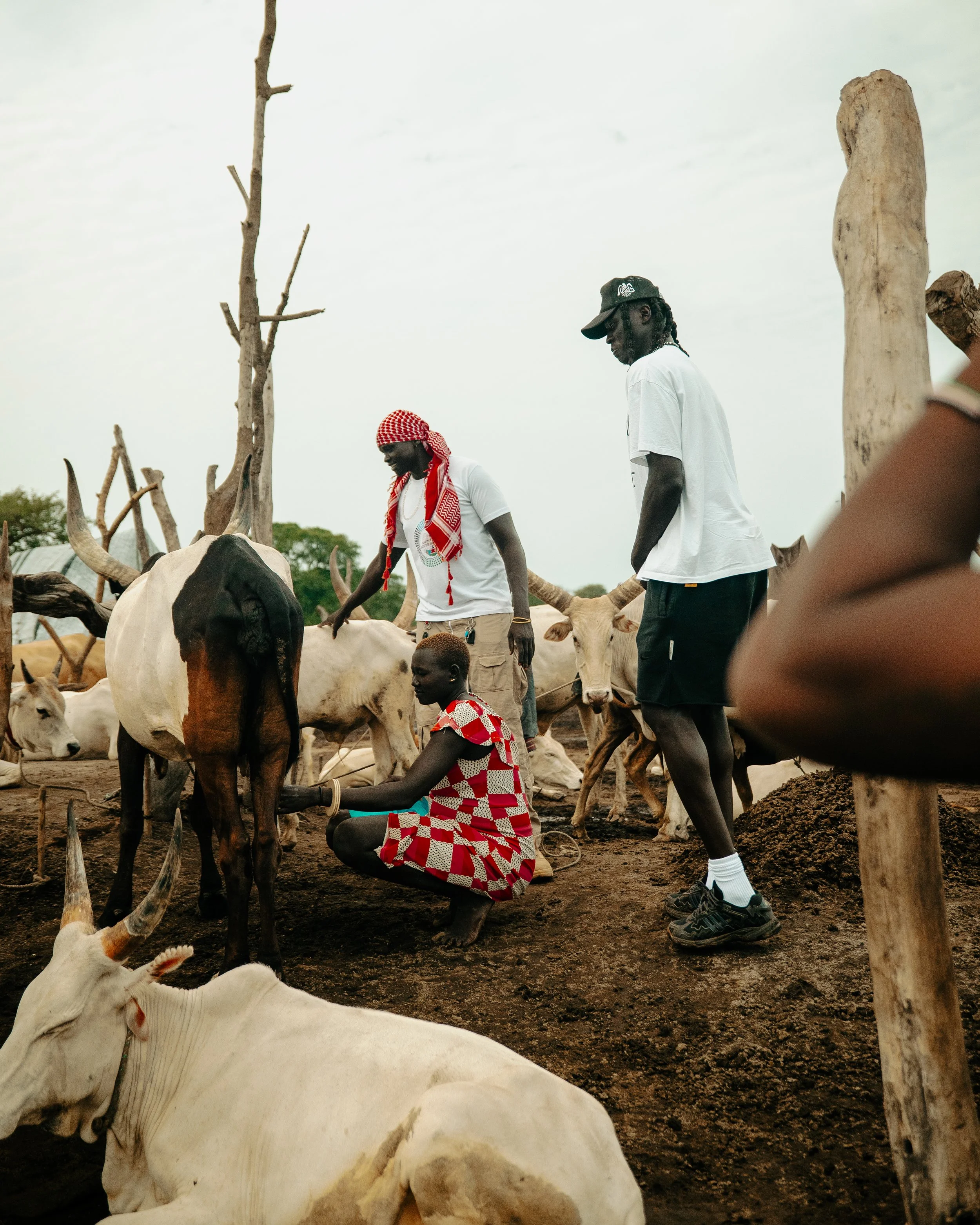
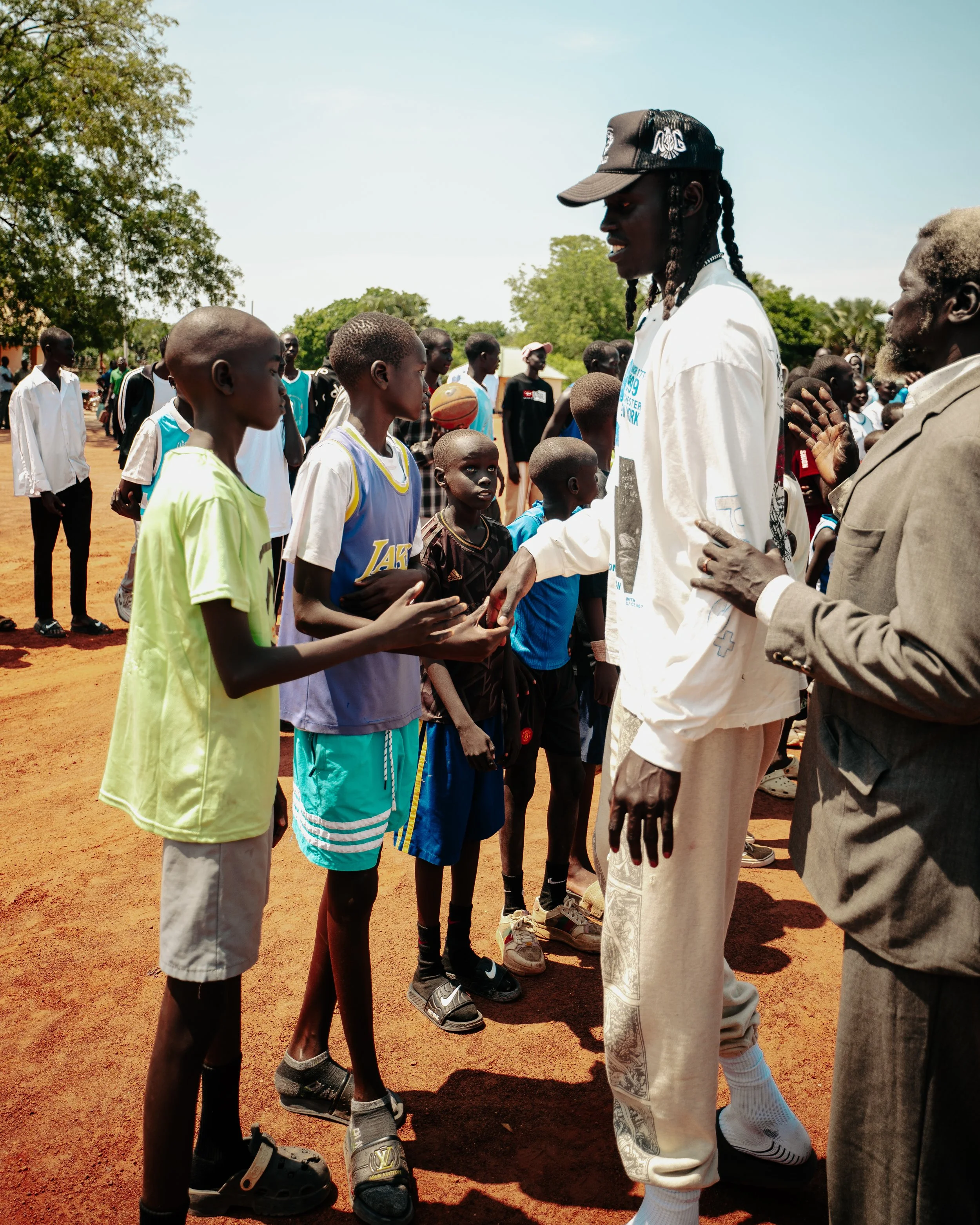
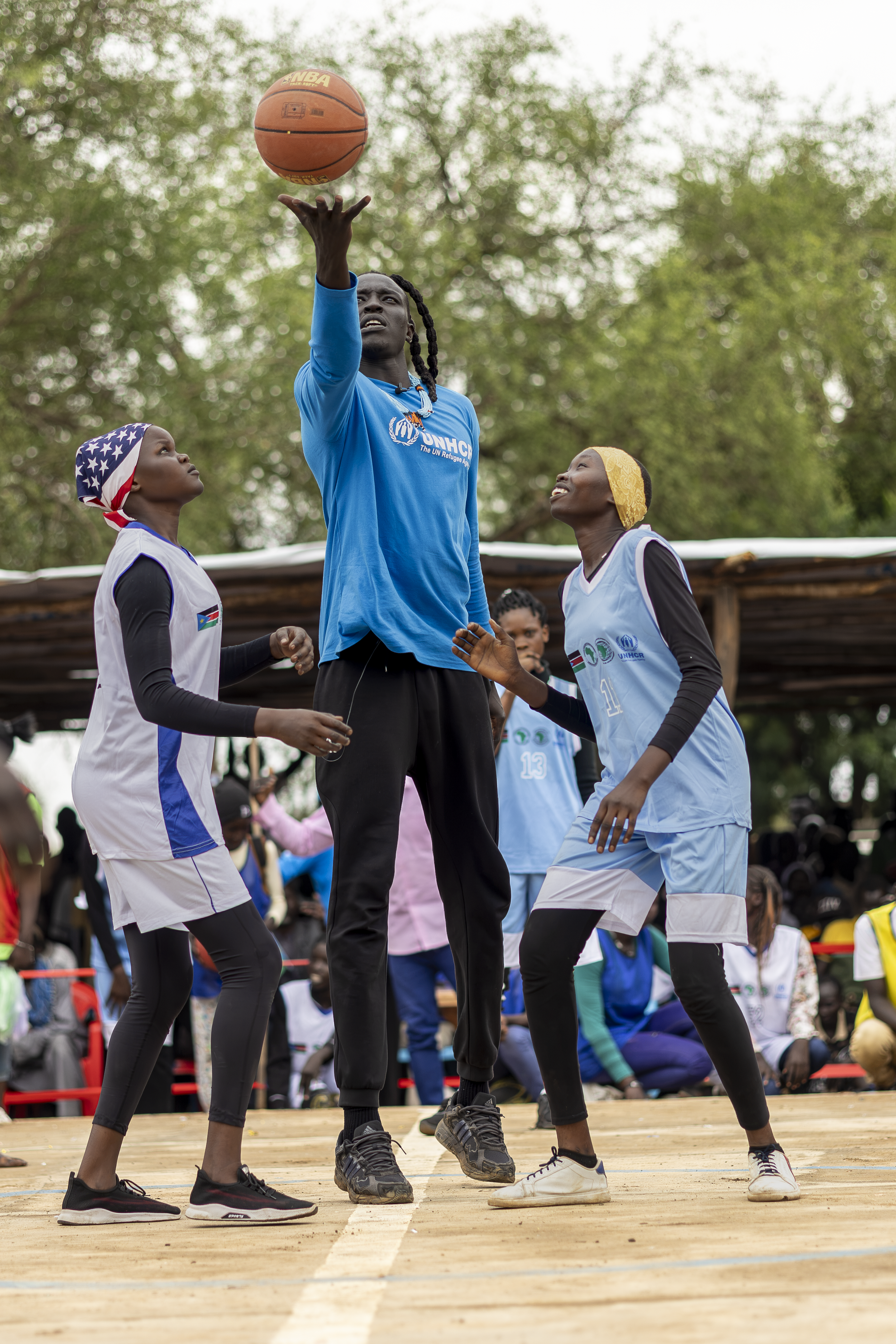
That is why, when he returned for an extended visit four years later, he transformed those first intentions into tangible opportunities for his fellow South Sudanese. As the camps and facilities around Juba continued to grow, he helped launch new basketball camps in Rumbek, the region his family calls home.
In Wenyen’s vision, everything begins with building a sustainable foundation. First, a court. Then coaches: trained not only to teach the Game, but to teach others how to teach it. Then basketballs. Shoes. Equipment. Above all, opportunities. Not isolated events or one-off appearances, but a structure that exists every week, from Monday through Friday, where education and basketball grow side by side.
“It was a huge success. We learned a lot. We were able to improve the structure of it, and our coaches were able to organize the camp throughout the year while we couldn’t go back and forth,” he says of the most recent camp, organized alongside Nuni Omot.
“Recruiting Nuni to come back home meant a lot. It showed the kids that it’s not just me: that there are other South Sudanese across the diaspora who want to return and help. That’s brotherhood. I had promised I would come back with more of us, and I kept that promise. I was really grateful that Nuni joined me.”
“We had no certified coaches in Rumbek or anywhere in Lake State. So we selected four young coaches, brought them to Juba to earn their certifications, and then sent them back to run the programming in Rumbek. That will eventually serve the whole of Lake State. Now we’re identifying the next counties we want to expand into. I expect the camp to be even better next year.”
“Hopefully, I’ll be able to bring back another teammate from Lake State. Maybe Khaman [Maluach], maybe Marial [Shayok], maybe Peter Jok. There are many of us on the national team who’ll have the opportunity to return home. Right now, I’m laying the foundation.” His vision extends far beyond a single basketball camp.
It is about imagining South Sudan as one interconnected landscape, where basketball becomes the thread binding together communities that geography, conflict, and displacement have long kept apart. For that vision to endure, the youngest generations must feel part of something larger than themselves: an ecosystem built on shared purpose rather than individual success.
“Someone growing up in Rumbek East may never meet someone living in Europe. I need them to understand that there are possibilities. I’m living proof of that. Basketball is an incredible connector. It can give hope to a kid who’s seven feet tall and doesn’t yet know what that means. Talent can be wasted if there’s no pathway to develop it.”
What was not wasted—also thanks to the support of UNHCR—was the extraordinary talent scattered across the South Sudanese diaspora. South Sudan has one of the world’s largest diasporic populations, and its national team stands as perhaps the clearest expression of that reality.
Players raised in the United States, Canada, Australia, the United Kingdom, Kenya, Uganda, and beyond came together under a single flag, leading the ‘Bright Stars’ to AfroBasket, the FIBA Basketball World Cup, and ultimately the Olympic Games. Wenyen knows how easily those opportunities might never have existed.
“The diaspora is extremely powerful. It’s proof that, if we’re given opportunities, we can succeed not only in sports but in every field, anywhere in the world. We arrive in these countries as refugees, carrying nothing but the determination to build a better life.”
“Thanks to my parents’ sacrifices, I could dream freely and just focus on becoming who I want to become. That’s proof that I’m not the only one who was like that. Our national team was able to come together and be so successful because we had these qualities instilled in us,” That, in many ways, is what being an ambassador truly means.
“I want people from the diaspora to return to South Sudan, reconnect with the land, and help our communities. We call ourselves the ‘Bright Stars,’ and that means something. We’ve created heroes who can inspire young people back home.”
“We’re role models. We can give people hope and turn it into something tangible. I’ve built one basketball court on my own, but imagine what we could accomplish if we combined our efforts. Imagine the bridge we could build between the diaspora and the communities waiting back home."
Even as millions of South Sudanese have been forced to seek refuge abroad, history has quietly shifted. With its borders open and conflict once again unfolding nearby, South Sudan has itself become a place of refuge for those fleeing Sudan. In Maban County, refugees now make up roughly seventy percent of the population.
UNHCR and local communities continue to share what little they have: water, homes, hospitals, essential resources. Yet it is still not enough. This is where Wenyen Gabriel’s voice finds its greatest purpose.
“That’s why I’m here. To call for more support, more humanitarian aid, and to remind the world that these people are in desperate need. The people who have the least are already doing everything they can to help those who have even less. I'm here to ask those who have the most to do their part as well.”
Had his family not carried with them the memory of displacement, and had he not chosen to confront the history of a country shaped by decades of civil war and unimaginable loss, his own story might never have carried the same meaning.
“I’ve grown into someone who can amplify other people’s voices. Leadership is about bringing people together and speaking for those who don’t have one. That responsibility has helped me grow as a man. I see it as both an honor and an opportunity, and it’s pushed me to find real ways to make change happen.”
“South Sudan is too often an afterthought. People see it as a country defined by war, as a failed state. But we have extraordinary untapped potential. It takes a village to begin telling that story. As we keep building, more stories will emerge. We need strong foundations and real opportunities so that others can tell theirs.”
His own life could easily have resembled that of countless other seven-foot boys growing up herding cattle across the dry plains of South Sudan, had opportunity never found him. And had basketball never entered his family’s life.
His sister, Karima Gabriel, opened that door first, earning a Division I scholarship to Boston College after starring at Trinity High School. Then came Wenyen’s cousin. Finally, Wenyen himself transformed the trajectory of an entire family. A top-fifteen recruit in the nation. Kentucky. The NBA. Then the international game. Finishing alley-oops while carrying a message far greater than basketball itself.
“Basketball became part of my family’s story very early on, and I believe that same story can become someone else’s in South Sudan today. Maybe not everyone needs to be resettled, but the people living in refugee camps desperately need opportunities. They can’t eat properly. They can’t access education. I want to help them build a normal life. That’s what I’m working for.”
As a child, he watched Manute Bol return to New Hampshire and witnessed everything he gave back to South Sudan. Later, Luol Deng transformed a remarkable NBA career into a lasting commitment to his homeland. They showed him what leadership could look like.
The South Sudan national team’s defining breakthrough came only weeks before its Olympic debut. The performance at the 2023 FIBA Basketball World Cup in Manila had already announced its arrival. But the exhibition game against Team USA at London’s O2 Arena resonated far beyond the final score.
“Everybody expected us to lose by a huge margin. Instead, it became a proud moment for African basketball and for our country. People all over the world, even those with no connection to Africa, were inspired by the story behind it. It showed what African basketball players are capable of.” Africa, unmistakably, is on the rise.
“The Basketball Africa League is creating another pathway for African players to build professional careers. That inspires young people across the continent to pick up a basketball and discover what they’re capable of.”
“A lot of us possess gifts that simply can’t be taught: our athleticism, our speed, our size. Those are qualities this sport demands. All we need are places where that talent can be developed and challenged. It’s only a matter of time before African basketball reaches the very top.”
“I think it’s a message to the rest of the world. I’m convinced that future generations will consistently compete with, and beat, the best teams from Europe and the United States. African basketball will earn the respect it deserves across the globe.” For Wenyen, South Sudan's journey has become more than a national achievement. It has become a blueprint others are already beginning to follow.
“I think we were able to inspire people with our story. That’s another reason why I believe it’s so special. Maybe it never received the attention it truly deserved. One of my best friends, Hamidou Diallo, is now going to represent Guinea, alongside Alpha Diallo and another former teammate of mine, Mamadi Diakite,” he says, speaking about Guinea’s national team.
“The desire to represent their own countries has grown. The same thing is happening across the continent, and it’s helping African basketball grow. It shows that we have incredible talent and that we’ve already proven ourselves at the highest level around the world. Right now, only one African team qualifies for the Olympics. I’m convinced that, in the future, there will be more.”
It is a story that “deserves to be told.” Yet, in Wenyen Gabriel’s mind, it is only the opening chapter. “People should understand what South Sudan really is. I believe they’ll continue to learn more about us, and this won’t be our last story. We have the potential to become the next basketball powerhouse in Africa, to return to the Olympic Games, and to compete with, and beat, the world’s best teams. That’s what I’m focused on.”
“At the same time, I’m focused on continuing to help build my country. We’ve already had members of the diaspora represent South Sudan at the Olympics. Now I’m trying to help discover the next Olympian who is born and raised in South Sudan. I want the future Bright Stars to come directly from home.”
Not bad for a kid born in exile in Khartoum. A refugee who found his way across continents, became the brightest basketball talent in his family, and ultimately used the Game to transcend the boundaries of playbooks, hardwood floors, and forty-minute clashes.
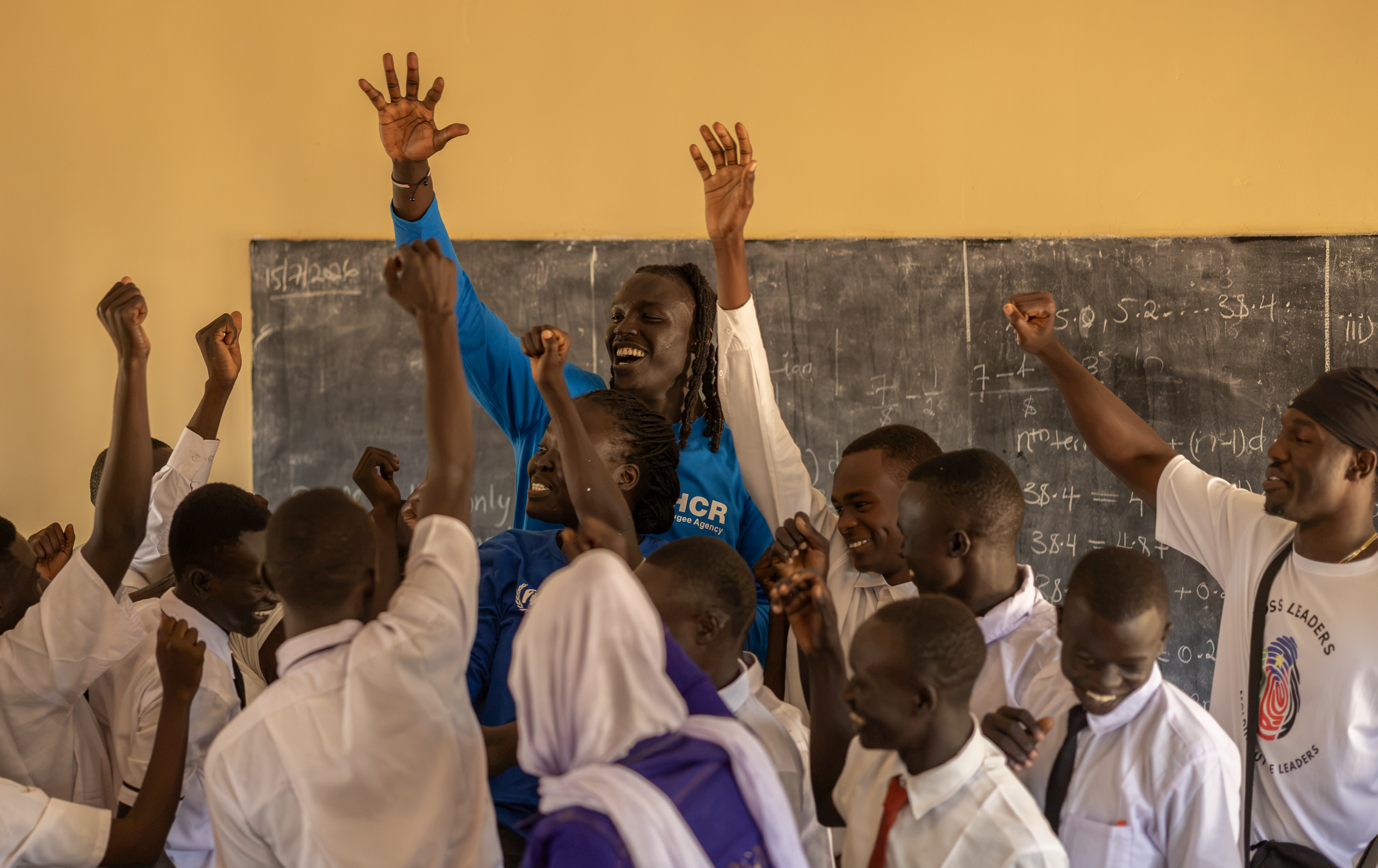
On his most recent return home, he joined a UNHCR mission to Maban, near the Sudanese border. There, he visited a school inside the Kaya refugee camp, where children handed him letters filled with little more than hope and dreams for the future.
Back in Geneva, as he closed his speech inside the Palace of Nations, he chose to lend his voice to one of those children. Khamis. Born in Sudan’s Blue Nile State, Khamis was only six years old when violence forced his family to flee into the forest, where many around them died from hunger and thirst.
Eventually, they reached Maban. There, they were welcomed as refugees. “Don’t forget about South Sudan. And don’t forget about the refugees living in Maban,” Khamis had told him. Once again, Wenyen’s voice broke. Once again, he wiped away tears. The applause seemed endless.
Over the course of his career, Wenyen Gabriel has taken thousands of shots. Under the bright lights of Hollywood. Inside Manila’s historic Araneta Coliseum. At OAKA in Athens. At Bayern Munich’s futuristic SAP Garden. Beneath the soaring eagles that accompany South Sudan’s national team onto the court.
But one shot mattered more than all the others. The one his family took in Egypt, when his father began volunteering with the United Nations and a new life suddenly became possible. More than two decades later, Wenyen Gabriel has returned to the same institution as a UNHCR Global Goodwill Ambassador.
“We cannot turn away. We cannot turn our backs on the people of those countries or the millions of others around the world, on every continent, who have been forced to flee their homes. We have to keep going until everyone is safe,” he concludes.
He will not forget Khamis. He will not forget Maban. He will not forget South Sudan: the homeland he was forced to leave, yet the only one he has ever truly carried within him. The kid born in exile in Khartoum made it. A refugee, standing for refugees. To wipe away your tears. And guide.