MyGen | Andrija Josovic, Allianz Derthona Tortona
Basketball is a matter of time and space, yet it’s also the only Game capable of living, and adapting, in every time and every space. Generation after generation. To understand where the Game stands today, and where it’s headed, there’s no lens sharper than the voices of the LBA NextGen Cup, the highest expression of Italy’s youth basketball system.
They embody the quintessence of that so-called poetry in motion: the vocation of a sport that, by its very nature, leans forward, toward progress, toward evolution. In the shifting rhythms and expanding spaces shaped by this new wave, basketball becomes a mirror of contemporary culture: something to listen to, to explore, free from stereotypes and outdated frameworks. This is MyGen. A series of visions of the Game as it is, and as it will become.
Our guest: Andrija Josovic, class of 2006, Allianz Derthona Tortona.
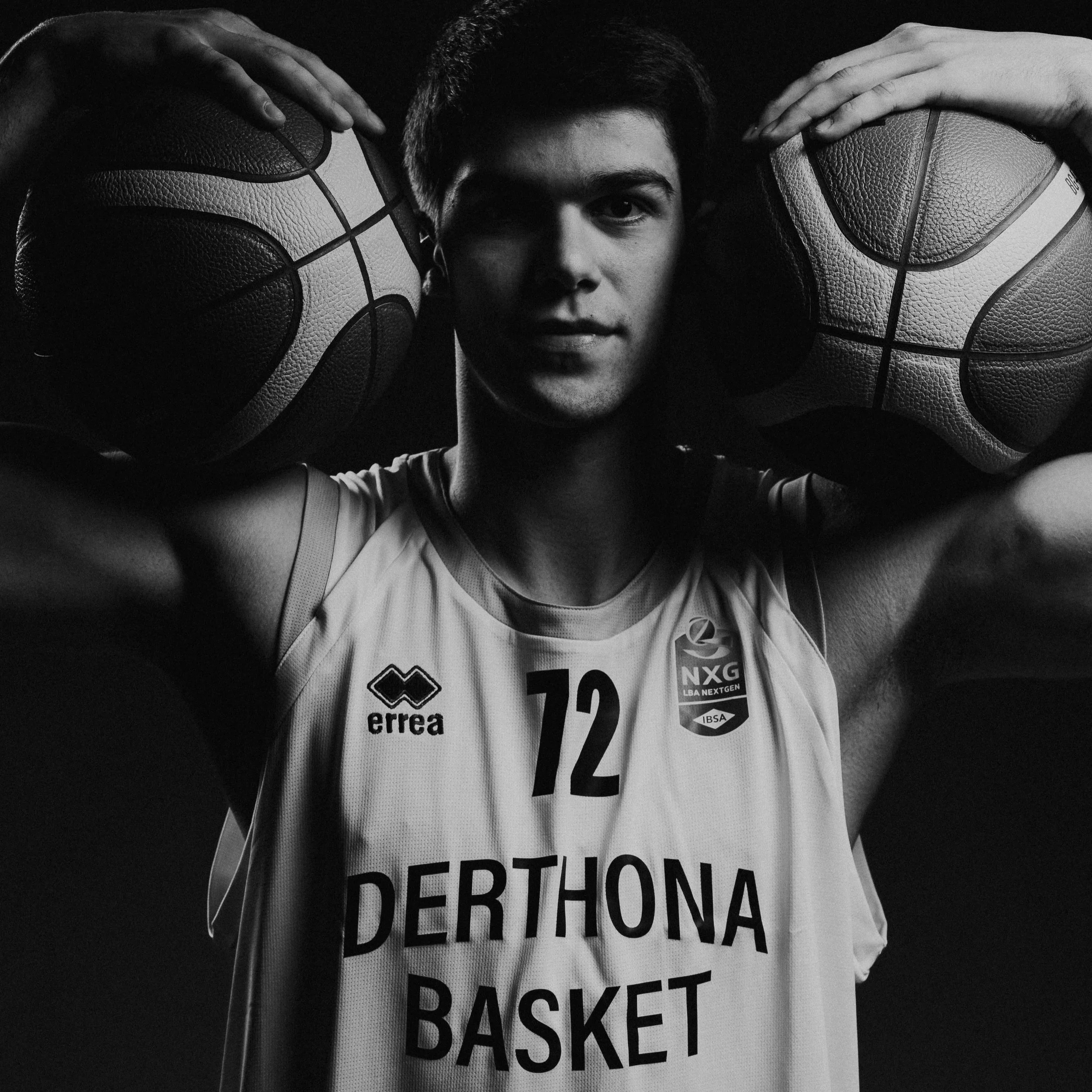
“I was born in Podgorica, Montenegro. Basketball is a family thing. It came into my life almost by accident: my brother was coaching a youth team, and one summer our family spent a few days helping out at a camp. I picked up a ball, took a few shots with my dad, and the coach happened to be watching. “Come train with us,” he said. Before that, I played football like most kids do: nothing serious, nothing that felt like it could shape a life. Once basketball found me, I fell for it instantly.
Back home, the basketball world is small. A few strong clubs, a handful of serious coaches, and a mentality that’s nothing like what I found in Italy.
In Montenegro, losing isn’t an episode, it’s a wound. Everything is heavier, sharper, more demanding. Here in Italy, things breathe differently.
Being from Podgorica means representing your city every time you step on a court. Back home, basketball and football are lived with the same fever. The country follows Budućnost, sure, but in truth most people live and breathe Partizan and Crvena Zvezda. I grew up a Zvezda fan. I still am. I watch a lot of basketball, especially EuroLeague, and Zvezda is always there. Always.
Moving to Italy at 16, alone, should have been difficult. It wasn’t. The first two weeks were the hardest, then everything opened up. I loved the people, the warmth, the way Italy makes you feel seen. The structure here in Tortona is on another level compared to Montenegro. That made adapting easier. And I never felt fear.

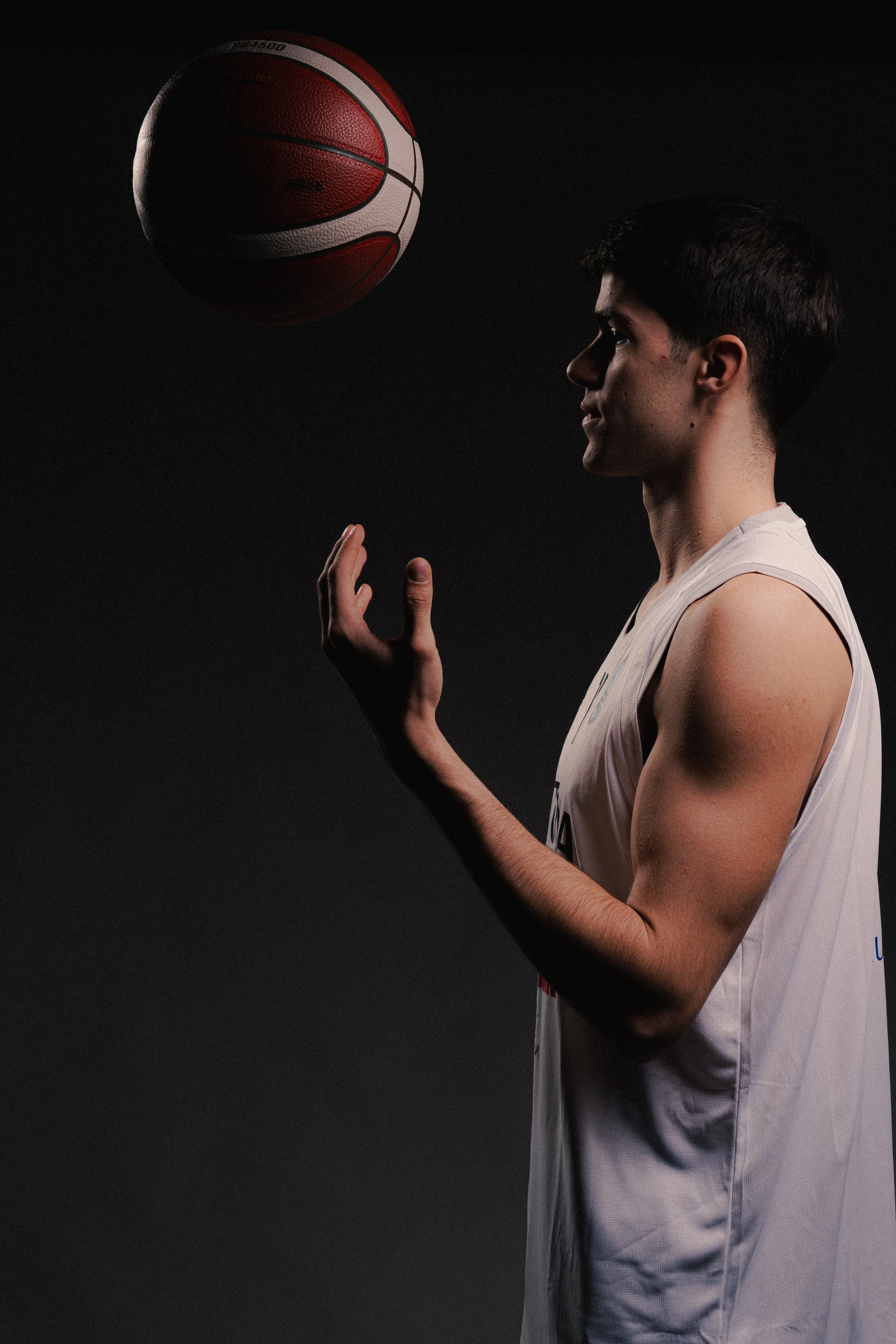
I arrived at Derthona already knowing they were in Serie A1. I wasn’t dropping into a small club or a lower division: I was stepping straight into a high-level environment. That gave me confidence. I trusted myself. I knew things would work out. The only thing that hurt, briefly, was family. Maybe a week of real homesickness. Then I found my balance.
The real shock was the rhythm. In Montenegro's youth system, the Game is played slowly: deliberate half-court basketball, coaches obsessed with timing and structure. In Italy, the game is on fast-forward. Even after a bucket, it explodes into transition. At the beginning, I wasn’t ready. Sometimes I still hesitate for a split second, like my old tempo is still inside me. But I’m getting there. Every day.
I don’t want to be a copy of anyone. I don’t want an idol to imitate. I want to take pieces from everyone I admire, and turn them into something that’s mine. For example, from Cody Miller-McIntyre, I want that coast-to-coast power after a defensive rebound. From Kevin Punter, the control, the craft, the elegance in his handle and body movement. From Nikola Mirotić, the footwork in the post, the spins, the fadeaways no one can contest even when they see them coming. I want to absorb these fragments, reshape them, and build a style that only I have.
Tortona has been a blessing for my journey. Serie A, NextGen, a city that breathes basketball, a brand-new arena: those things give you energy. I train with the first team every day. I try to give them everything I have.
The mentality here is different from Montenegro. There, a loss can feel like a national event; the sadness lingers. Here, people suffer, but they also move on. In Montenegro, I played with teammates who became brothers, real brothers. I’ll never forget them. Here, too, I’ve found a great group. A different family, but still a family.
My real family follows me everywhere. They come to Italy whenever they can. My brother was at the last NextGen event in Verona. When someone you haven’t seen in months suddenly appears in the stands, your motivation becomes something else entirely.
My biggest dream is the NBA. I don’t know how long it will take or what the exact path will look like. But I know I can get there. I believe in myself. I’m not afraid. I’ll do everything. Step by step.

For me, basketball is, above all, joy: the feeling of being fully alive the moment the ball touches my hands. But it’s also work. Serious work. And I treat it that way.
Enjoyment and discipline don’t cancel each other out; they strengthen one another. Some teammates approach the Game mainly through that lightness, and I respect it. I just live it differently: with more intensity, more intention. Some guys feel the Game as I do; others simply want to savor the moment. That’s fine. Everyone has their own way.
To those who say modern basketball is worse, less thoughtful, that my generation is a step below the old school, I say this: the Game changed. Everywhere. NBA, EuroLeague, youth competitions. Everything moves faster now. And when the Game evolves, you evolve with it. If you don’t adapt, you fall behind. That’s the only rule. Basketball moves. So you move with it. Forward, always.”